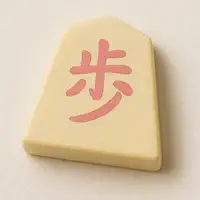
On Shogi Wars, I am 4-dan, at least nominally.
I say "nominally" for a reason. It does not at all mean that I can always play like a 4-dan.
I reached 4-dan during a period when I was playing very keenly, pouring almost all my free time into shogi. In other words, it is close to my personal best.
When I come back after a break, I sometimes make terrible mistakes and lose badly, even though my rank still says 4-dan. I often feel let down, thinking "That last move was awful..."
However, concluding "I've gotten weaker" or "I'm in a slump" after losing just a few games is a mistake.
Even if your displayed rank stays fixed at your peak, the strength you can actually bring to the board that day varies quite a lot. Also, shogi is a game where small differences in strength or form show up clearly in the results.
In this post, I will dig into these points.
Even at 90% of your strength, you lose a lot
For example, suppose you and your opponent are usually about even in strength.
But on this day you are a little off, and you are only playing at about 90% of your usual strength.
You might think "90% isn't that different."
But in shogi, even this much of a gap shows up quite strongly in the results.
A game against an equal opponent is decided by a very fine margin. If even a small difference in strength appears, it turns directly into a clear difference in wins and losses.
What's more, in shogi, unlike mahjong or card games, there is no element of luck that can help you win.
As a result, even differences like reading slightly less accurately, your sense being slightly dulled, or concentrating slightly less can, judging only by results, lead to three or four losses in a row in shogi.
How it feels for me when I play after a break
I myself do feel a little weaker when I play again after some time away from shogi.
What is interesting is that I don't forget tesuji or openings, and it feels like I can play mostly the same way.
However, during games I notice subtle signs of being off, like these:
- A mate that I used to see immediately takes a few extra seconds to see
- An attack by my opponent that I should have predicted slips out of my reading
- I hesitate for a moment in an opening I thought I knew
None of these is a change big enough to call getting suddenly worse.
However, these "a little slower" and "a little vaguer" moments clearly show up in the results of close games.
In my case, it sometimes feels like I am playing about one dan weaker.
3-minute games measure how "in tune" you are more than your strength
The effects of being off form or of a break show up most in 3-minute sudden-death games, or "3-min blitz."
In 3-min blitz, there is no time to think things over carefully.
You play far more moves on feel, like
"This shape looks like a mate" or "I should probably attack here."
And this kind of feel and split-second judgment clearly gets dull after a break.
In fact, I have had days when I came back, got crushed in 3-min blitz, and yet played decently in 10-minute games.
I was playing on the same day in the same condition, and just changing the time control changed the results a lot.
Thinking about it that way, what has dropped is not so much my strength itself, but rather how fast I can play on reflex and my shogi-specific sense.
In other words, 3-min blitz measures not only pure playing strength but also, quite strongly, "how in tune with shogi you are right now."
It is only natural that someone coming back after a break can't win at 3-min blitz.
Your opponent might be "someone who plays all the time"
Even if you open the app thinking "I'll just play one game after a long break,"
your opponent is not necessarily coming back after a break.
They might have played many games yesterday and today, with their shogi brain fully warmed up.
It might be your 1st game of the day and their 10th.
Even if you are matched at the same rank, you are not necessarily in the same state once you include game sense. Especially in 3-min blitz, I think this difference is quite large.
Sometimes it is hard to win just because of matchups
Apart from playing strength, there is also how well you match up against your opponent.
- You are bad against opponents who keep attacking, even when the attacks are a bit unsound
- You are bad against opponents who actively trade bishops
- You are bad against opponents who play unusual strategies like the Ureshino opening or the Duck Castle (Ahiru)
You probably have things like these.
Even against an opponent a little weaker than you, it can be strangely hard to win if their style or strategy is one you are bad against.
On the other hand, even against an opponent a little stronger than you, you can play surprisingly well if the game goes the way you are good at.
If you keep running into opponents you are bad against, you can easily lose several games in a row to lower-ranked players even though your strength has not dropped.
When matchups add up like this, it becomes even harder to judge your own strength from the results of just a few games.
Summary!
Your game results mix together not only your playing strength itself but also many other things: the condition of your brain, time away from the game, how you use your time, game sense, matchups with opponents, and so on.
And because games against equal opponents are decided by a fine margin and there is little variation from luck, even a slight dip in form shows up quite strongly in the results.
Losing a few 3-min blitz games in a row on the day you come back does not, on its own, prove that your strength has dropped a lot.
If you keep playing for a while, you will win like before again, and you will definitely be able to string together winning streaks too!
About my books
I have published e-books on Kindle to help you improve at shogi.
The series is recommended for players who have just learned the rules and for beginners!
📚 Available free for Kindle Unlimited members!
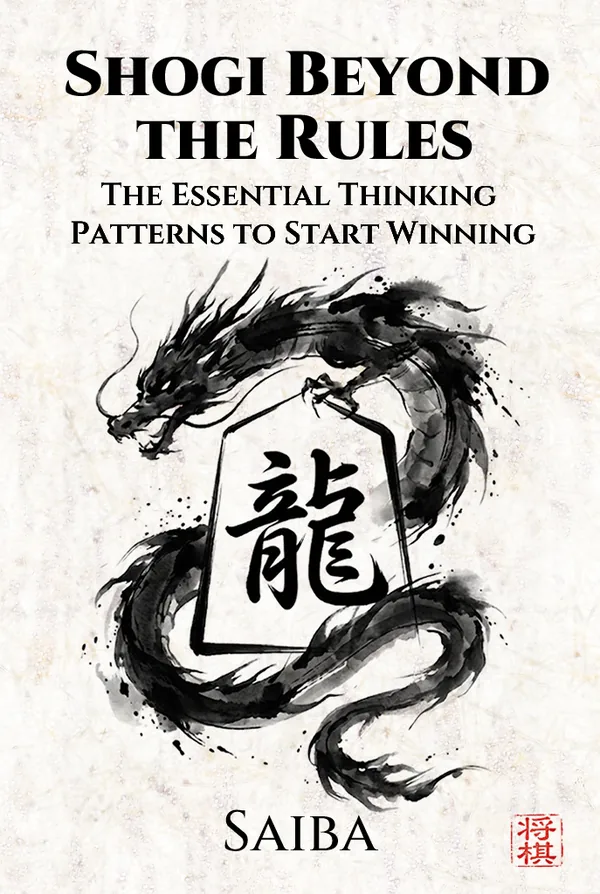
Shogi Beyond the Rules — Think Better, Play Better, Win More
Available on Kindle Unlimited. A practical thinking guide for players who know the rules but still can't win.
View on Amazon
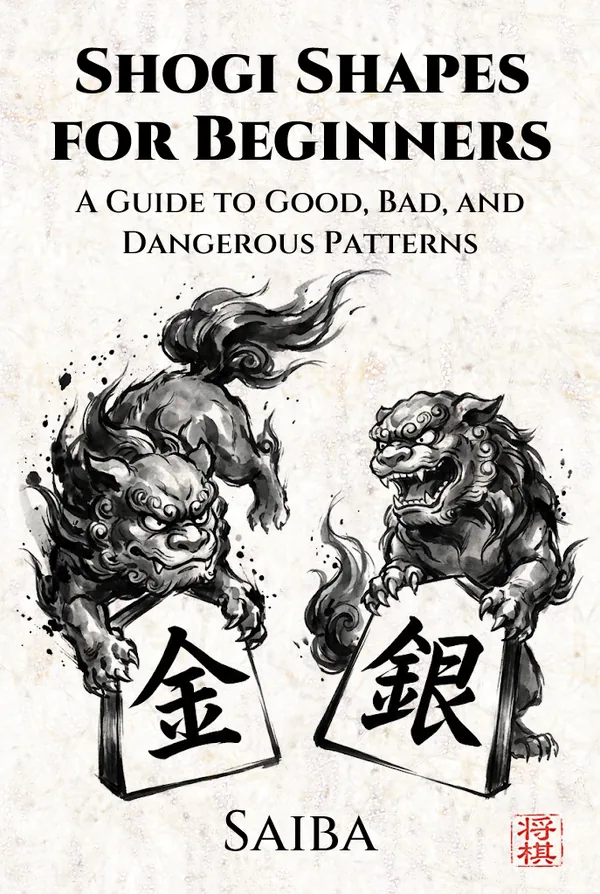
Shogi Shapes for Beginners
Available on Kindle Unlimited. Win more Shogi games simply by avoiding Bad Shapes.
View on Amazon